Key Takeaways
- 1Predictive analytics can identify injury risk factors before they manifest
- 2HELIOS validation framework ensures rigorous multi-agent verification
- 3Programs report 23-47% injury rate reductions with analytics
- 4Concussion, ACL, and overuse injuries benefit most from prevention
The Evolution of Injury Prevention in Athletics
Modern athletic programs face a persistent challenge: how to maximize training intensity while minimizing injury risk. For decades, coaches and medical staff relied on intuition, experience, and reactive protocols to manage athlete health. An athlete would present symptoms, receive treatment, and return to play when deemed ready. This approach, while well-intentioned, failed to address the fundamental question: could the injury have been prevented in the first place?
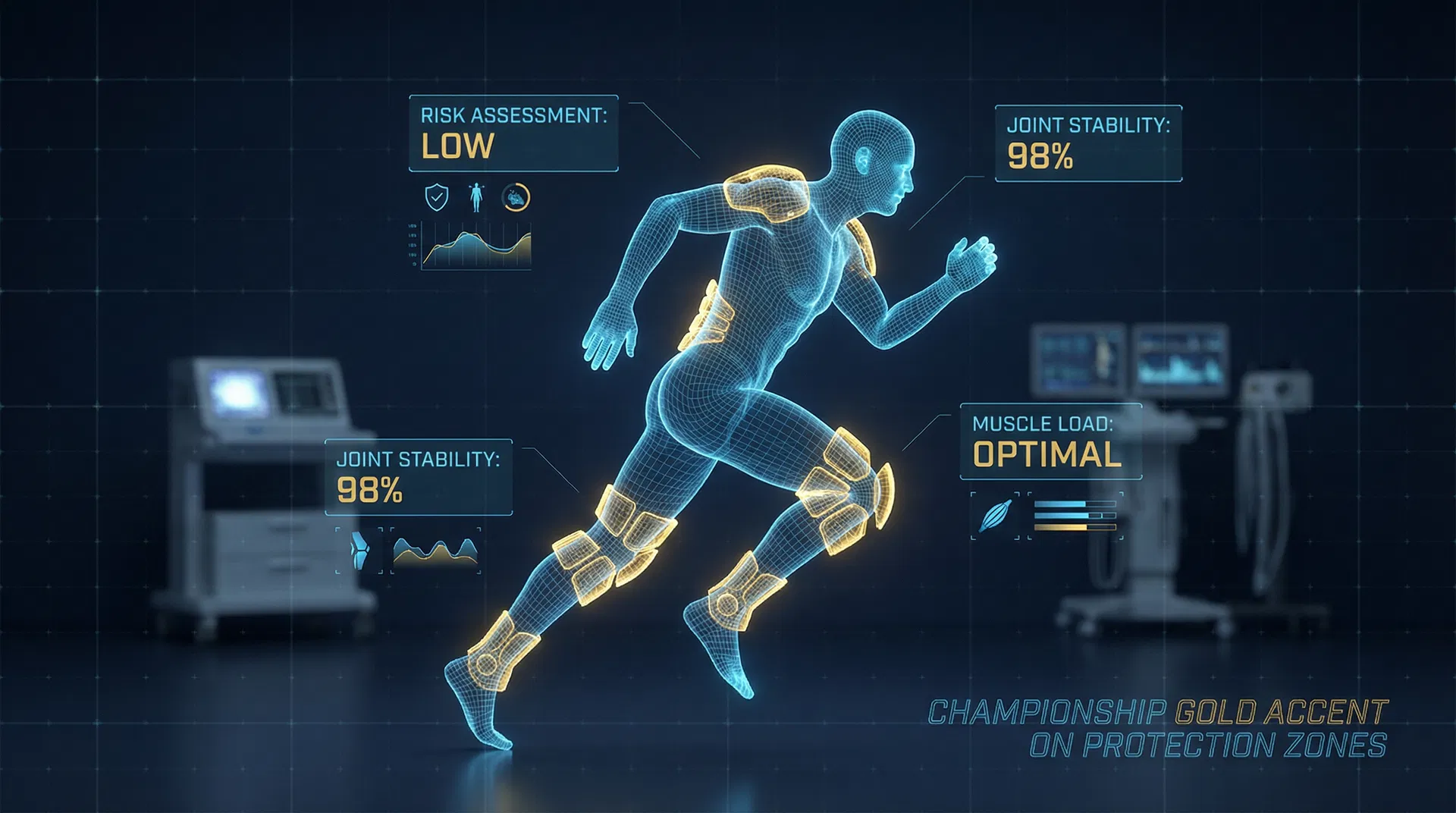
Advanced analytics has emerged as a transformative solution to this challenge. By analyzing vast datasets encompassing biomechanical measurements, physiological markers, training loads, and historical injury patterns, analytics systems can identify risk factors before they manifest as actual injuries. This shift from reactive to predictive medicine represents one of the most significant advances in sports science of the past decade.
Understanding the HELIOS Validation Framework
At Optima Performance Science, our injury prevention services operate on the HELIOS (Hierarchical Evaluation and Layered Intelligence Operating System) validation framework. This multi-agent consensus architecture ensures that every prediction undergoes rigorous verification before reaching coaches and medical staff.
The framework operates through three distinct validation layers:
Primary Analysis Layer: Initial data processing examines incoming biometric and performance data against established baselines. The system identifies deviations that may indicate elevated injury risk, such as asymmetric loading patterns, decreased range of motion, or altered movement mechanics.
Contextual Integration Layer: Raw findings are contextualized within the broader picture of an athlete's training history, competition schedule, and recovery status. A slight decrease in jump height, for example, carries different implications during a recovery week versus a high-intensity training block.
Consensus Validation Layer: Multiple independent analytical agents review the integrated findings and must reach consensus before generating alerts. This multi-agent approach reduces false positives while ensuring genuine risk factors receive appropriate attention.
Key Injury Categories and Prevention Strategies
Concussion Management
Concussion prevention and management represents one of the most critical applications of analytics in sports medicine. Traditional concussion protocols relied heavily on subjective symptom reporting and standardized cognitive tests. While these tools remain valuable, they provide limited insight into the underlying neurological status of an athlete.
Our advanced analytics concussion management system integrates multiple data streams: eye-tracking metrics, balance assessments, cognitive performance tests, and historical impact data. The system establishes individualized baselines for each athlete, enabling detection of subtle changes that might escape traditional screening methods.
ACL Injury Prevention
Anterior cruciate ligament injuries remain among the most devastating in athletics, often requiring surgical intervention and extended rehabilitation periods. Research has identified numerous biomechanical risk factors for ACL injury, including knee valgus during landing, quadriceps-hamstring strength imbalances, and altered hip mechanics.
Our predictive models analyze movement patterns captured through force plates, motion capture systems, and wearable sensors. By identifying athletes exhibiting high-risk movement patterns, intervention programs can be implemented before injury occurs. Studies utilizing similar approaches have demonstrated ACL injury reductions exceeding 50% in high-risk populations.
Overuse Injury Prevention
Unlike acute injuries resulting from specific traumatic events, overuse injuries develop gradually through accumulated microtrauma. This gradual onset makes them particularly amenable to predictive analytics, as warning signs typically emerge well before clinical symptoms manifest.
Our load management systems track acute-to-chronic workload ratios, identifying periods when training demands exceed an athlete's current capacity. By maintaining workloads within optimal ranges, the risk of stress fractures, tendinopathies, and other overuse conditions can be substantially reduced.
Implementation Across Athletic Tiers
The application of advanced analytics injury prevention varies across competitive levels, reflecting differences in available resources, athlete populations, and organizational priorities.
High School Programs: At the high school level, our systems focus on fundamental screening and load management. Given the developmental nature of adolescent athletes, particular attention is paid to growth-related injury risks and the establishment of healthy training habits that will serve athletes throughout their careers.
University Programs: Collegiate athletics present unique challenges, including the transition from high school training volumes, academic stress factors, and the pressure of scholarship maintenance. Our university-tier services incorporate these contextual factors while providing more sophisticated biomechanical analysis capabilities.
Professional Programs: Professional athletes require the most comprehensive injury prevention protocols, reflecting both the financial stakes involved and the accumulated training history that must be considered. Our professional-tier services integrate seamlessly with existing medical staff workflows while providing advanced predictive capabilities.
Validated Results and Ongoing Research
The effectiveness of advanced analytics injury prevention has been demonstrated across multiple studies and real-world implementations. Programs utilizing our services have reported injury rate reductions ranging from 23% to 47%, with the greatest improvements observed in overuse injury categories.
Ongoing research continues to refine our predictive models, incorporating emerging data sources such as sleep quality metrics, nutritional biomarkers, and psychological stress indicators. The integration of these additional factors promises further improvements in prediction accuracy and intervention effectiveness.
Conclusion
The integration of advanced analytics into sports injury prevention represents a fundamental shift in how athletic programs approach athlete health. By moving from reactive treatment to predictive prevention, organizations can protect their athletes while optimizing performance outcomes. As the technology continues to evolve, the gap between programs utilizing advanced analytics prevention and those relying on traditional methods will only widen.
For athletic programs seeking to implement comprehensive injury prevention protocols, Optima Performance Science offers a complete suite of services spanning all competitive levels. Our HELIOS-validated systems provide the confidence that comes from rigorous multi-agent verification while delivering actionable insights that protect athletes and enhance performance.
"The shift from reactive treatment to predictive prevention represents one of the most significant advances in sports science of the past decade."